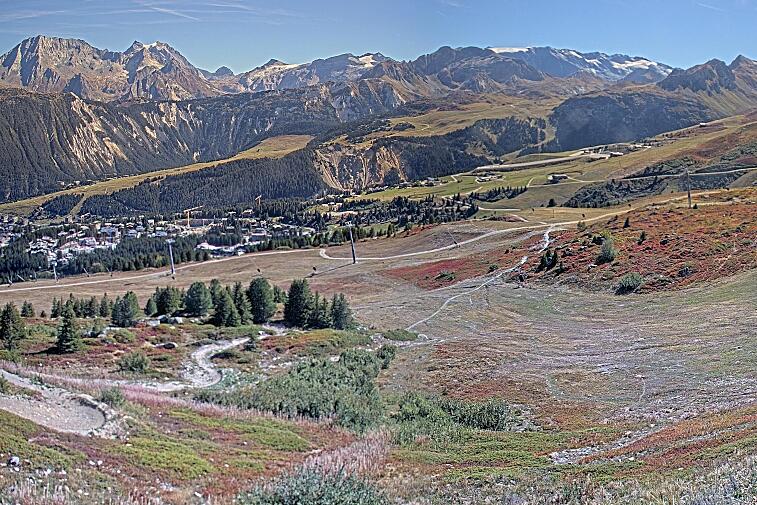
Not much more is documented until the turn of the 20th century when Courchevel was little more than a combination of high mountain pastures and dense forest. There were no towns and barely any villages to speak of, with most locals being farmers or working in the mill. One of the only significant buildings in the area at the time was the Town Hall in the village of Saint Bon, built in 1870. The water-driven sawmill in La Jairaz dates from at least 1902 and was built by order of the Count-Archbishops of Tarentaise.
The Hotel Lac Bleu was the first hotel to open for a summer season in 1908 and for a winter season in 1925. By this point people were starting to visit Courchevel for its winter sports, but you had to be keen! With no lifts yet built the only option was to walk or climb up the mountains and ski back down again; a challenge now only attempted by choice by ski mountaineers. Some hardy souls used to camp out in the farms and outbuildings at Pralong before the opening of the first mountain refuges.
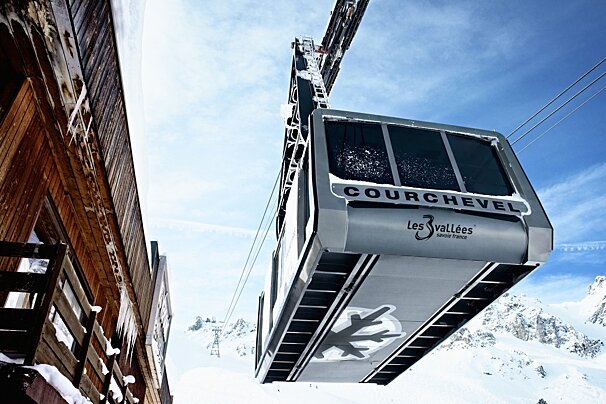
The original idea of Courchevel as a resort was conceived during the Second World War when in 1942 the French Commission of Tourism expressed an interest in creating a ‘super ski resort.’ Their criteria included terrain between 1400 and 1800 metres and the feasibility of installing a reliable lift system to link them together and create an enormous cohesive ski area. At this time the regions of Courchevel, Saint Bon and Moriond were seeking funding for development and regeneration; and so Courchevel became France’s first purpose-built ski resort, built more or less from scratch!
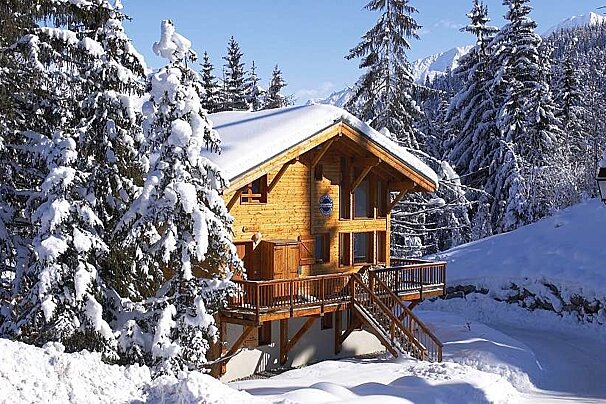
The actual designs for the new resort were initially conceived by two Savoyard men, Laurent Chappis and Maurice Michaud, whilst interred in a Nazi prisoner of war camp in Austria. Between February and April 1946 Chappis, a keen skier, made numerous surveys alone on skis of the Trois Vallées area to map all the best routes and develop his ideas on the planning of the resort. His aim was to create a resort that was as close to nature as possible; no concrete buildings, no levelling of forests and no overwhelmingly high buildings. The original plans intended to leave every rock and tree untouched; the resort would be built around the natural lie of the land, rather than bulldozing over it. An original example of this is the Chalet Petit Navre in Courchevel 1850. Designed by Denys Pradelle it is in natural wood with a low sloping roof and blends into the landscape unobtrusively.
In March 1946 the first ski lift was begun and a chairlift between Courchevel and Les Tovets was installed. The plateau of Les Tovets was developed to become what we now know as Courchevel 1850 and the renaming of the levels of the resort would prove to be controversial. Courchevel was already the name of a small hamlet further down the valley, the inhabitants of which were incensed at having their name appropriated and being relegated to the title of ‘Courchevel Dessous’ or ‘Lower Courchevel’. Therefore a compromise was reached and it was agreed to name all the levels Courchevel, with their altitude included in the name to distinguish one from the other. The inclusion of the altitude was not merely a naming convention though as much as a cunning marketing ploy – Courchevel 1850 was thus named in direct competition with rival resort Val d’Isère (at 1,800 metres), despite only really being at an altitude of 1,747 metres!


![[itemref] lounge](https://cdm0lfbn.cloudimg.io/v7/_images_base_/image_uploader/photos/original/2103-1-eden-20_1_21030001_1000__wwatermark1363125858_1363125858.jpg?ua=1766709535&p=listing_summary_middle)